


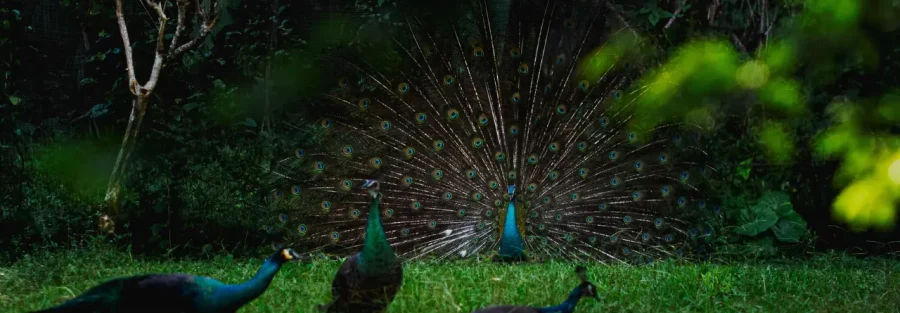
In many parts of Pakistan, especially in older homes, villages, and traditional family estates, there was once a sight that felt completely normal at the time but almost surreal today — a peacock calmly walking through the courtyard as if it belonged there.
Long before exotic pets became a social media trend, peacocks already held a strange and beautiful place in Pakistani culture. Families kept them not only because they were visually stunning, but because they carried a certain presence that no other bird seemed to possess. They were elegant, loud, dramatic, and impossible to ignore.
Why Families Kept Peacocks
The reasons people kept peacocks were not always practical. In fact, practicality had very little to do with it. For some families, especially in rural areas or large traditional homes, peacocks represented beauty and status. A home with peacocks immediately stood out. Guests noticed them. Children followed them around. Entire conversations would stop the moment the bird opened its feathers.
At the same time, there was also an emotional attachment to them. Unlike parrots or pigeons, peacocks felt almost theatrical in the way they moved and behaved. They brought life into open spaces and made homes feel grander than they actually were.
In some households, keeping peacocks became a tradition passed down through generations. The birds were cared for with surprising dedication, sometimes roaming freely through gardens and rooftops as if they were unofficial members of the family.
The Sound That Became Part of Daily Life
One thing people often forget about peacocks is how loud they are. Their calls are sharp, dramatic, and impossible to ignore, especially during the monsoon season. In many older neighbourhoods and villages across Pakistan, hearing peacocks call out during cloudy evenings was once a familiar part of the atmosphere.
For some people, those sounds became deeply nostalgic. They were connected to childhood memories, summer rains, old homes, and slower evenings spent outdoors. Interestingly, the noise rarely bothered families who kept them. In fact, many became emotionally attached to those sounds because they made the home feel alive. It is strange how certain animals become woven into memory not only through appearance, but through sound itself.
Peacocks and the Monsoon Connection
There is also a cultural fascination surrounding peacocks and rain in South Asia, including Pakistan. Many people believe peacocks become more active before rainfall, often spreading their feathers dramatically as the weather changes. Whether entirely scientific or partly romanticized through tradition, this connection became deeply rooted in local imagination.
In villages and older communities, the sight of a peacock dancing before rain was often treated almost like a seasonal ritual. Children gathered to watch. Adults smiled knowingly. The bird somehow became connected to the emotion of the monsoon itself. Over time, this gave peacocks a presence beyond that of a simple pet. They became part of the atmosphere of Pakistani seasons and family life.
The Challenges Behind Keeping Them
Despite their beauty, peacocks were not easy animals to care for. They required space, patience, and constant attention. Unlike smaller birds kept in cages, peacocks needed room to move freely. They could become aggressive, unpredictable, and extremely noisy, especially during mating seasons.
Their health also required careful management. Feeding, protection from stray animals, and proper shelter became important responsibilities for families keeping them long term. As cities became more crowded and modern housing shifted toward apartments and enclosed communities, keeping peacocks slowly became less practical. The large courtyards and open spaces that once suited them naturally started disappearing. Eventually, what was once common in many households began fading into rarity.
Why this Tradition Started Disappearing
Urbanization changed many aspects of life in Pakistan, and the tradition of keeping peacocks quietly faded alongside it. Modern cities no longer had the same physical space or environment needed for such birds. Noise regulations, smaller homes, and changing lifestyles made keeping peacocks increasingly difficult.
At the same time, people’s relationships with animals also changed. Pets became more focused on companionship inside homes rather than symbolic presence in outdoor family spaces. As a result, peacocks slowly moved out of everyday life and became something people mostly encountered in farms, rural areas, or private estates. Yet despite this decline, the fascination surrounding them never fully disappeared.
Why People Still Feel Drawn to Them
Even today, peacocks continue to hold a strange emotional power over people in Pakistan. Part of it is obviously visual. Few creatures look as unreal as a peacock when its feathers open completely under sunlight. The colours almost seem artificial, too dramatic to belong naturally to a living animal.
However, the deeper reason may be cultural memory. For many Pakistanis, peacocks represent an older version of life — one tied to open homes, family gatherings, slower evenings, gardens after rain, and traditions that felt more connected to nature. Seeing one instantly creates nostalgia, even for people who never personally owned them.
Final Thought
The tradition of keeping peacocks as pets in Pakistan was never only about owning a beautiful bird. It was about atmosphere, pride, memory, and the strange human desire to keep something extraordinary close to everyday life.
Over time, cities changed, homes became smaller, and lifestyles moved faster. Naturally, the tradition began disappearing. Yet the emotional image of the peacock never truly left Pakistani culture. Even now, when people hear that familiar cry during monsoon weather or catch sight of those feathers spreading open somewhere unexpectedly, something pauses inside them for a moment. Because some animals do not simply exist around people. They become part of how a place remembers itself.