

We ended the last of these on a small island in the Gulf, and we left with a promise. Standing in Bahrain, I said the next flight would go east, to Pakistan. So here we are. And Pakistan, it turns out, does not do quiet entrances. Because right now, this very summer, Pakistan is playing in the World Cup. Not the way you think. Better.
Right now, somewhere, a ball is rolling
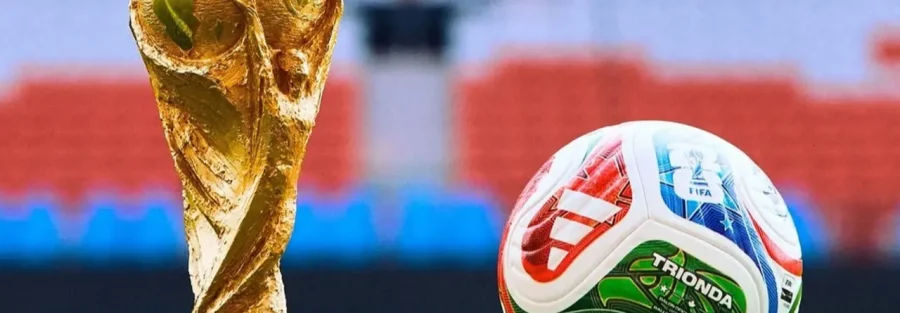
The 2026 World Cup is underway, watched by more people than any event humans stage. At the center of it, touched in every match, is a single object almost nobody in the stands thinks twice about. The ball. It has a story, and it is not the one you would guess.
It did not come from where you would guess
It was not born in a German laboratory or an American factory or wherever you might assume such things are made. It was cut, stitched, bonded and tested into being by human hands in a hot, humming, wildly underrated city in the northeast of Pakistan. The official match ball of the 2026 World Cup, the one every hero and every heartbreak this tournament runs through, is Pakistani. So were several of the balls before it.
It came from a city called Sialkot
Say the name out loud, because you will want to remember it. Sialkot.
Two out of every three
Roughly two of every three footballs on the planet come from this single city. Not two of three made in Pakistan. Two of three anywhere, in every park, every schoolyard, every back alley, every final. When the world plays the world’s game, it is very often playing with something Sialkot made. The trade is worth well over a billion dollars, and none of it arrived by luck. It was built, panel by hand-stitched panel, across generations.
The ball that learned to think
And this is no ordinary leather sphere anymore. The factory leading the work, Forward Sports, has been turning out World Cup balls for over a decade, the Brazuca in 2014, the Telstar in 2018, and now the Trionda in 2026. The newest one carries a sensor at its heart, a small chip that feeds data to the video officials, tracking every touch to help settle offside calls that used to be impossible to prove. A ball from Sialkot, wired into the sharpest refereeing the sport has ever had. The oldest craft and the newest intelligence, folded into the very same seams.
The city that refused to wait its turn
Now consider what this city does when it runs out of patience. Years ago, tired of waiting for the state to connect their exports to the world, the businesspeople of Sialkot did something almost comic in its confidence. They built their own international airport. Hundreds of them pooled their money, tens of millions of dollars of it, and raised a working airport out of their own pockets, the only privately built one in the country. Sialkot does not wait to be chosen. It has never really asked permission.
Now go and look up Pakistan’s football team
And here comes the twist that makes the whole thing sing. Go and check where Pakistan sits in the world football rankings. You will find it near the very floor, below nearly two hundred other nations. Pakistan has never played in a World Cup. Not once, not ever. This summer, as always, it did not qualify, knocked out early and beaten in every game.
So here is the absurd and wonderful arithmetic of it. The country that makes the ball the entire planet is watching is the same country that has never once been allowed to kick it on that stage.
And yet Pakistan is on that field in every single match
Sit with that a while, though, and the sadness quietly becomes something better.
Because Pakistan is on that pitch, in the most literal sense there is. Every match at this World Cup is played with a ball that Sialkot made. Every pass, every save, every goal that decides a nation’s summer runs through Pakistani work. A team can miss a tournament. The hands that made the tournament possible miss nothing. They are in the thick of all of it, all of the time.
There is a kind of victory that never makes the highlight reel. It belongs to the makers, the ones whose names are not on the shirt but whose work is in every single frame. Sialkot has been collecting that trophy, without fuss, for decades.
So here is what is true, whether or not anyone notices
The ball at the heart of the world’s biggest game came from a city that built its own airport because it was done waiting, in a country that has never reached the World Cup and yet has never once missed it either. The players will take the glory, and they will have earned it. But the ball was already home long before the first whistle. It was made in Pakistan. And in the only way that truly lasts, so was the game.